

Technology
Our Initiative
Solving Waste and Energy Challenges through Biofuel Production
GreenX produces renewable biofuels using discarded resources such as coconuts and cellulosic wheat straw as raw materials.
Through our proprietary patented technology, we have established a highly efficient production process that significantly reduces energy consumption and contributes to lower CO₂ emissions compared to conventional manufacturing methods.
By collaborating with universities and research institutions both in Japan and overseas, GreenX is advancing the development of a sustainable energy society.
Utilization of unused resources


.jpg)

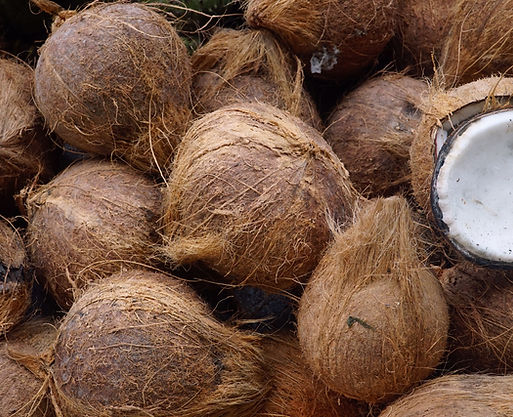
Unused coconuts
About 30% of coconuts produced worldwide are discarded as “unused coconuts” because they are unsuitable for consumption due to immaturity, cracking, or sprouting.
At GreenX, we utilize these unused resources as raw materials for fuel.
Cellulosic Biomass
Since unused coconuts alone cannot secure a sufficient amount of fuel, we also utilize the following cellulosic resources.

Corn leaves and cobs

sugarcane residue

Rice straw and wheat straw

Waste paper, wood, etc.
Cellulosic waste
Products
BDF (Biodiesel Fuel)
A renewable fuel produced from waste-derived lipids
Ready for direct use in diesel trucks, generators, and other diesel-powered equipment
Significantly reduces CO₂ emissions compared to fossil fuels
Gaining attention as a locally circular energy solution


SAF (Sustainable Aviation Fuel)
A next-generation fuel supporting decarbonization in the aviation industry
Quality and performance assured through joint research with Osaka Metropolitan University
Superior environmental performance compared to conventional aviation fuels
GreenX holds rare production capabilities that remain limited within Japan
Applications
Decarbonization of logistics and transportation companies
Waste reduction initiatives led by local governments
SAF adoption by airlines
Collaborative research with universities and research institutions
Commitment to Raw Materials and Production Methods
Selection of Raw Materials (Optimization of Reaction Conditions)
We use environmentally friendly, non-edible waste resources as our raw materials (e.g., coconut oil, cellulose).
In addition, by comparing conventional methods with our proprietary “co-solvent method,” we emphasize our ability to achieve reactions at lower temperatures and in shorter timeframes.
Manufacturing Energy for BDF and SAF
Production method
Reaction condition
Production Energy (MJ/t)
BDF : conventional
60°C, 2h reaction
149.4
BDF : co-solvent
Room temp, 30min
3.5
SAF : hydrocracking
400°C H2/oil = 3
Sp heat of =0.51cal/g
Heat of evaporation=44kJ/mol
H2 formation=68.7kJ/molyield=40%
4478
SAF : hydrodecarbxylation
200°C, H2/oil = 1
yield=70%
933
SAF co-solvent
Room temperature, No H2
3.5
B. Selection of Production Method (Features of the Co-solvent Method)
By adopting our proprietary “co-solvent method,” we achieve the following manufacturing benefits:
Before reaction

共溶媒法
従来法
After reaction
従来法

石鹸を生成せず
石鹸の生成
Reaction possible at ambient temperature and pressure (energy-saving)
Easy separation of oil and products
Minimal soap formation, resulting in fewer impurities
Reduced raw material usage
Faster reaction speed
Lower manufacturing costs
